Building a Record Collection: 1976 - 11 Months and 29 Days thru Brazilian Dorian Dream
Johnny Paycheck, Jorge Ben, Blue Öyster Cult, ABBA, Manfredo Fest
I’m building my dream record collection. Thirty albums from each year between 1960 and 2020. Five albums per post, one year per month, a round-up of other notable records before I move on to the next. I want to build a personal music collection like a small library of modern art, one in which the album is the medium. You can read my complete thinking here, including links to other entries. No one’s musical knowledge is complete, and neither is mine. Please point out my massive gaps in the comment section!

The year is 1976. The first international punk concert, the 100 Club Punk Festival, is held in London and includes the Sex Pistols, the Clash, the Damned, Buzzcocks, and the debut of Siouxsie and the Banshees. “Anarchy in the U.K.” is released by EMI. George Clinton and Parliament-Funkadelic debut the Mothership for an elaborate stage show tour. Tina Turner files for divorce from Ike. George Harrison is found to have subconsciously plagiarized the Chiffon’s “He’s So Fine” for “My Sweet Lord.” Philip Glass’s Einstein on the Beach premieres in France. Martin Scorsese films the Band’s last public performance. Kris Kristofferson and Barbra Streisand’s A Star is Born is the second highest-grossing film of the year in North America. Elton John discloses his bisexuality for the first time in a Rolling Stone interview. Howlin’ Wolf and Johnny Mercer pass; Paul Robeson succumbs to complications of a stroke; Phil Ochs commits suicide. The CB radio craze momentarily takes over country music thanks to C.W. McCall’s “Convoy.”
See all of the 1970s selections
See all selections listed by artist

1976
Part 1
Listed alphabetically by album title
Johnny Paycheck - 11 Months and 29 Days (Epic)
outlaw country
If anyone could wear the outlaw country garb with authenticity, it is Paycheck. By the time he records his first album in the throwback, anti-Nashville mode, he’s been jailed, brigged, addicted, and homelessed. Producer Billy Sherrill pulls the singer/songwriter out of his early-70s tailspin. Needless to say, Sherrill is decisively non-outlaw, being the ears behind “Stand by Your Man” among many other countrypolitan hits. In fact, the comeback hits on this record—“She’s All I Got” and “Slide off of Your Satin Sheets”—are mainstream and popular. But Sherrill is also an astute man, and he sees the potential in Paycheck’s instinctive rebel attitude and aging drawl. So out comes the honky tonk, the blues, the gritty rock, the Texas. It’s a perfect match. When Paycheck is singing about his year in a Lone Star slammer, you buy it. When he slightly slurs through an ode to the honky tonk bar, you cheers him. When he gives outlaw country a theme song, the album closer, “That’s What the Outlaws in Texas Want to Hear,” you latch on. Sherrill’s production is Nashville-level in its quality and expansiveness—the surprisingly modern rhythm of “I Can See You Lovin’ You Again” and the country-gospel cover of Paul Simon’s “Gone at Last,” for example—but the bandit vibe remains. It is also the perfect set-up for 1977’s career-defining Take This Job and Shove It. Paycheck, unfortunately, has more real-life outlawing in his future, but here is where he best plays the role.
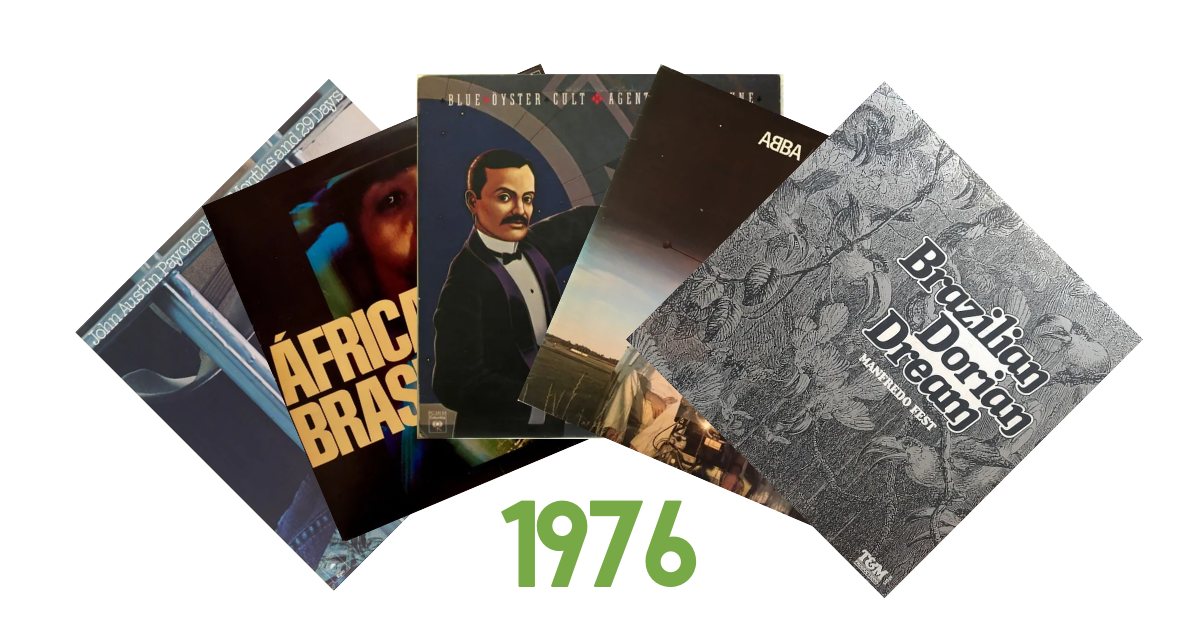
The album cover is simultaneously ridiculous and wonderful. It definitely reads like a major label trying to present Paycheck as a bad ass, which is probably why they use his full name. That said, Paycheck’s is not really a face you can manufacture.
Jorge Ben - África Brasil (Philips)
samba-funk
Ben goes electric. The singer/songwriter is exploring the intersection between Afro-Brazilian and African-American throughout out the 70s, but this is the first time he swaps out his percussively attacked acoustic guitar for the amplified sounds of a plugged-in one. It makes an easy path toward the choppy sound of funk, which pairs well with Ben’s siren of a singing voice. He employs the sizable band Admiral Jorge V to join him in a Rio studio alongside Azymuth’s José Roberto Bertrami. They layer the percussion and use rhythm to reference Brazil’s diverse Africa-origined cultures. Ben sings with penchant enthusiasm about Afro-Brazilian identity, celebrating fictional (Umbabarauma) and historical (Francisca da Silva de Oliveira) characters alike. There are also plenty of references to themes from his most recent records, including alchemy and Candomblé. The ecstatic “Taj Mahal,” which will soon be lifted by Rod Stewart for his own hit song, acts as a centerpiece, its melody the wormiest of all earworms. The music never exactly sounds like American funk, but it certainly shares its energy and bounce. It is a true synthesis: samba, rock, soul, MPB, and funk, all swirled together with charisma. Ben reportedly doesn’t care for the final mix of the record, but it is hard to argue with the crispness producer Marco Mazzola brings to the album. You can hear the crackle in the electricity, whether it is coming from the polyrhythmic energy, Ben’s attitude, or that plugged-in guitar.
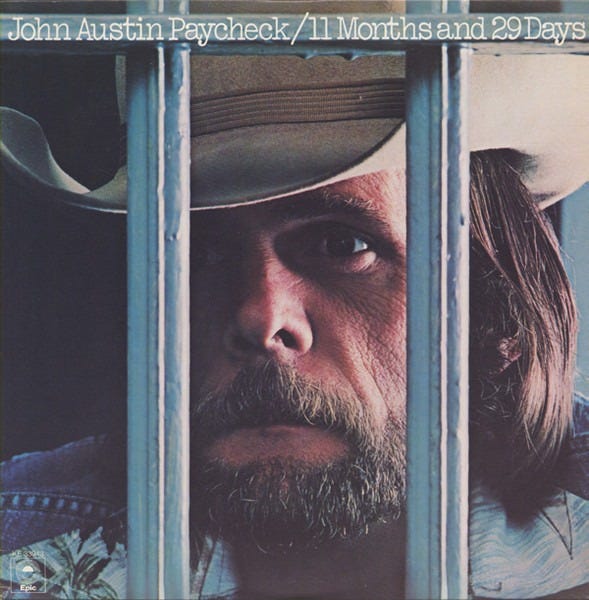
Ben also doesn’t care for the album cover. I, for one, absolutely love the titling. And the photo of him mid-performance is pretty excellent, even if he may read it as a bit unflattering. I would consider it a success, even if Ben doesn’t.
Blue Öyster Cult - Agents of Fortune (Columbia)
hard rock
The hard rock cliché, before it betrays a lack of originality. You could almost argue that Spın̈al Tap parodies Agents of Fortune alone, from the umlaut to the shared lead vocal duties to the stylistic diversity. That is because this album celebrates all that is great about hard rock and the snowballing heavy metal scene. The riffs are arena-caliber, the choruses shout-along, the backbeats full of fills, and the lyrics fantastically ridiculous. With now a number of albums behind them, the quintet, with the help of a trio of producers, make good use of their acquired studio prowess. They wield an impressively rich color palette, from the 80s pop-metal preview of “E.T.I. (Extra Terrestrial Intelligence),” with its UFO synths and laser show-ready guitar soloing, to the foggy haunts of the cowbell classic “(Don’t Fear) The Reaper” and the Patti Smith-amplified “The Revenge of Vera Gemini.” Most importantly, singing along is endless fun no matter which songwriter is up-to-bat: “There devil, she-devil, wicked devil, evil / I love you like sin / But I won’t be your pigeon!” You can’t help but wonder just how many teenage and adolescent boys spend their summer imbibing Agents of Fortune. Well, actually, just look at the 80s metal section of any record store and you can know exactly how many.
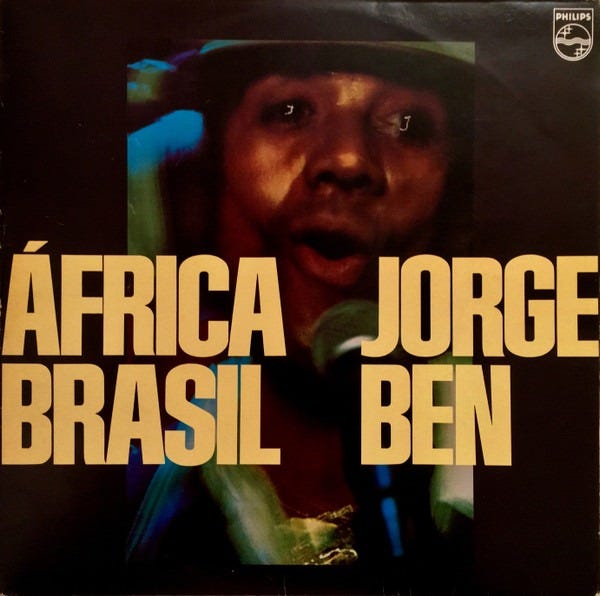
An album cover just as important to fantasy-loving heavy metalers. Belgian magician Servais Le Roy wields four tarot cards: Death, The Empress, The Emperor, and the Sun. Perhaps a reference to “(Don’t Fear) The Reaper”? Perhaps because they simply look badass? And I especially love the slightly clandestine pointing to the BOC logo, as if Le Roy is hinting at the secret forces behind his magic. Too much fun.
ABBA - Arrival (Atlantic)
Euro-pop
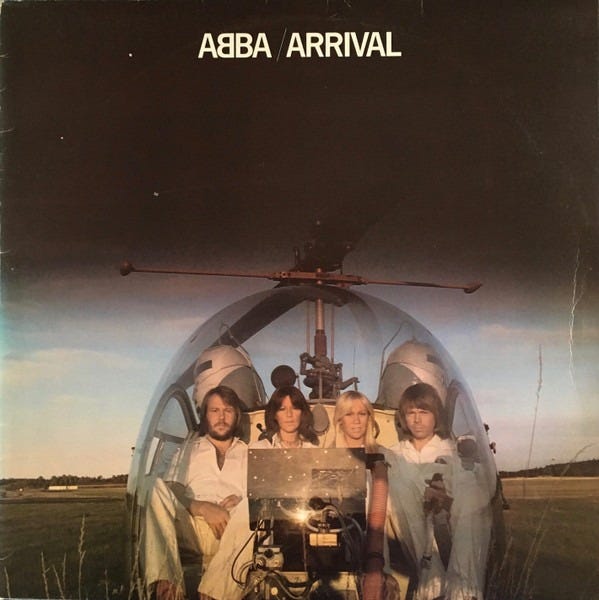
ABBA’s bubblegum blows up. In just a couple of years, the Swedish quartet expand their sound from the throwback Brill Building pop of “Ring Ring” to the theatrical rock of the Eurovision-winning “Waterloo” to the disco-perfecting “Dancing Queen,” the massive international hit that launches Arrival into the pop stratosphere. They enter the studio entranced by George McCrae’s “Rock Your Baby,” and they exit with a Euro-pop classic. It exudes professionalism in its lack of edge, but it transcends schlock thanks to those rainbowing textures. Benny Andersson’s layered synths provide a springboard for the twin vocals of Agnetha Fältskog and Anni-Frid Lyngstad, each able to confidently lead a track but are only truly ABBA-worthy when in sync and causing some sort of pop phase-alignment: fuller, punchier, clearer, more affecting. There is something else about ABBA though, something “foreign” perhaps. But not just the Swedishness, mostly communicated through their style and the album cover’s icy stares. Instead, like David Bowie or Phil Spector’s hair, the quartet’s ability to command pop hooks and unleash them in ostentatiously wonderful ways is practically alien. It is all confidence and bold colors. “I am the tiger!,” the twin voices yell—between soft pop bops and hard rock riffs, of course—near the end of the album. Indeed! The apex predator of bubblegum pop, all muscle and majestic movement.
Two main takeaways from this album jacket: 1) The collective bangs; 2) The introduction of the mirrored ‘B’ in ABBA. That would be enough, but the lack of smiles take it to the next wonderful level.
Manfredo Fest - Brazilian Dorian Dream (T&M Productions)
fusion-funk
One for the true crate-diggers. Fest is far from a household name, and Brazilian Dorian Dream is the type of self-released gem that certain LP hounds ruin their sinuses over by flipping through dusty bin after moldy, dusty bin. It is seven tracks of synth-driven fusion-funk, spacey in its sound and groovy in its Latin rhythms. Fest records it in his one-time home of Minnesota, where he first settles after relocating from Rio de Janeiro. Legally blind, classically trained, synthesizer-obsessed, raised in the bossa nova movement, and professionally honed by touring with Sergio Mendes. The German-Brazilian keyboardist challenges himself to channel his musical fusions through the Dorian mode, a limitation that demonstrates his compositional and improvisational skills while leveraging the scale’s uniquely uplifting and mystical vibe. Mission accomplished. Fest’s range of keyboards produces a space station drunk on cachaça: ambitious, synthetic, woozy, funky, and all fun. The rhythm section provides a Latin jazz swing with just the right amount of mechanical precision. And Minneapolis-based session vocalist Roberta Davis expertly hangs with Fest’s every twist and turn, wordlessly adding a needed human element to the festivities. Many-a small-run record grails are more curiosities than anything else, rarities for a reason. Brazilian Dorian Dream succeeds as a single-minded wonder that deserves many more ears.
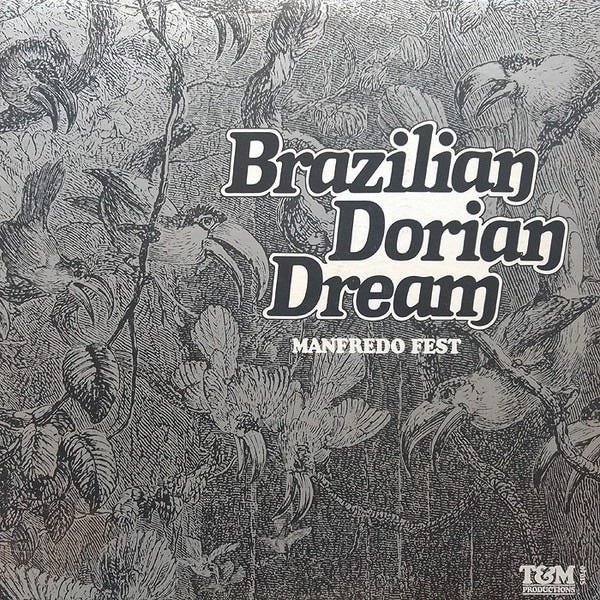
I am assuming the ‘M’ in T&M Productions is Manfredo, and the ‘T’ is Tom Jung, the album’s producer. I love the textured background they choose. And the cut-out titling is actually pretty great as well, especially those toucan-billed final letters. They have some visual flair to go along with the obvious musical talents.