

Building a Record Collection: 1973 - 3 + 3 thru Closing Time
The Isley Brothers, Betty Davis, the Wailers, Al Green, and Tom Waits
I’m building my dream record collection. Thirty albums from each year between 1960 and 2020. Five albums per post, one year per month, a round-up of other notable records before I move on to the next. I want to build a personal music collection like a small library of modern art, one in which the album is the medium. You can read my complete thinking here, including links to other entries. No one’s musical knowledge is complete, and neither is mine. Please point out my massive gaps in the comment section!

The year is 1973. Albums are delayed due to the 1973 oil crisis causing shortages in vinyl. Richard Branson launches Virgin Records with Mike Oldfield’s Tubular Bells, and Casablanca Records sign Kiss as their first act. CBGB opens in Manhattan; the Roxy Theatre opens in West Hollywood. American Country Countdown debuts. Queen Elizabeth opens the Sydney Opera House. Puerto Rican music promoter Izzy Sanabria hosts the television show Salsa, popularizing the term for New York-based Latin music, particularly of Cuban origins. Led Zeppelin breaks The Beatles record for highest attendance for a concert. Robert Wyatt becomes paralyzed from the waist down after a three storey fall in London. Stevie Wonder spends four days in a coma after a car accident in North Carolina. Sister Rosetta Tharpe, Willie ‘The Lion’ Smith, and Gene Krupa pass; Gram Parsons dies of a drug overdose; Víctor Jara is murdered by the Pinochet regime. DJ Kool Herc isolates the breaks in a couple of hard funk records for a technique called “The Merry-Go-Round,” creating hip-hop in the process.
See all of the 1970s selections
See all selections listed by artist
1973
Part 1
Listed alphabetically by album title
The Isley Brothers - 3 + 3 (T-Neck)
psychedelic soul-funk
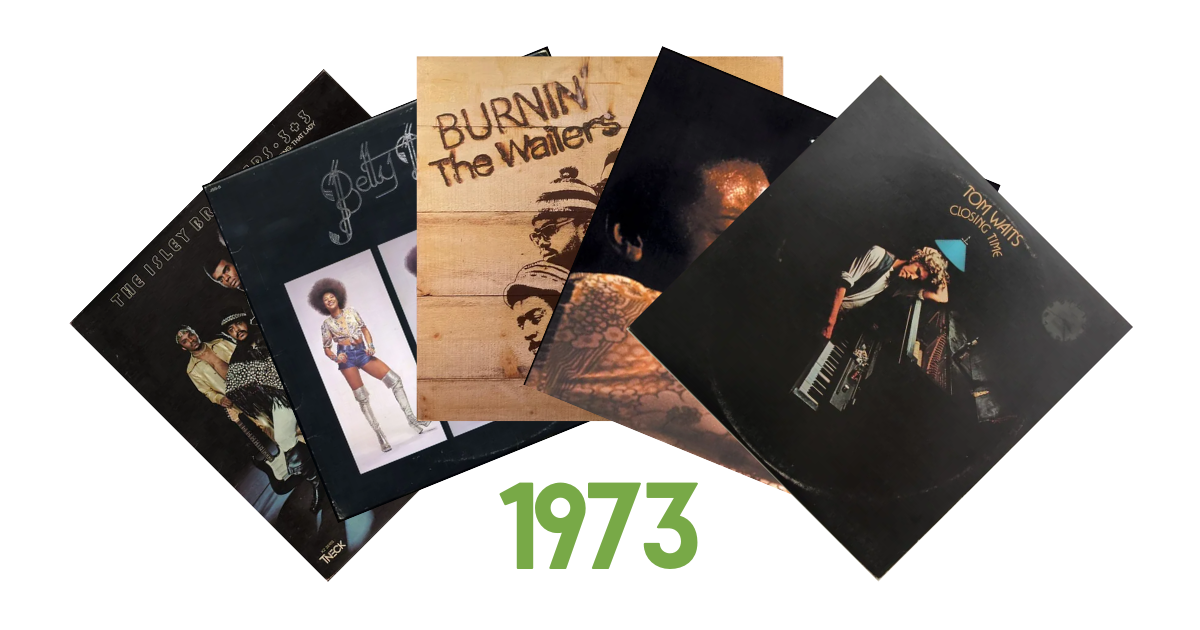
The Isley Brothers officially double-up. The next generation of the fam—Hendrix-loving guitarist Ernie, funk bassist Marvin, and keyboardist cousin Chris Jasper—have been collaborating with the original trio for a couple of albums now. With the aptly named 3 + 3, however, the younger trio are now officially in the group and on the cover. Similarly transitional, the Isleys are finding their 70s niche on this record as a super-smooth funk-rock outfit after a 60s spent defining what we now call “soul music.” They reimagine one of their earlier songs, the Impressions-mimicking “Who’s that Lady?,” as the psych-funk sensuality bomb “That Lady, Pts. 1 & 2.” Ronald’s undressing vocal is counterbalanced with a flame-hot guitar solo from Ernie; it’s as appropriate for the bedroom as it is a packed concert with lighter-raising whoops of appreciation. The expert interpreters then turn their attention to soft rock, which is inspired source material. James Taylor’s “Don’t Let Me Be Lonely Tonight,” the Doobie Brothers’ “Listen to the Music,” and especially Seals & Crofts’ “Summer Breeze” get the deep-soul Isleys treatment and come out the other side bigger, better, and much, much sexier. Don’t discount the effect of recording this album at the same time and in the same studio as Stevie Wonder as he puts together Innervisions either. ARP synthesizer masters Robert Margouleff and Malcolm Cecil engineer both albums, and that same polyphonic keyboard bounce grooves hard on each. Where Wonder is deep in the city, however, the Isleys are looking for the lift of glittery funk. Luckily, they have twice as many super-talented, family-member arms to heave it into the stratosphere.
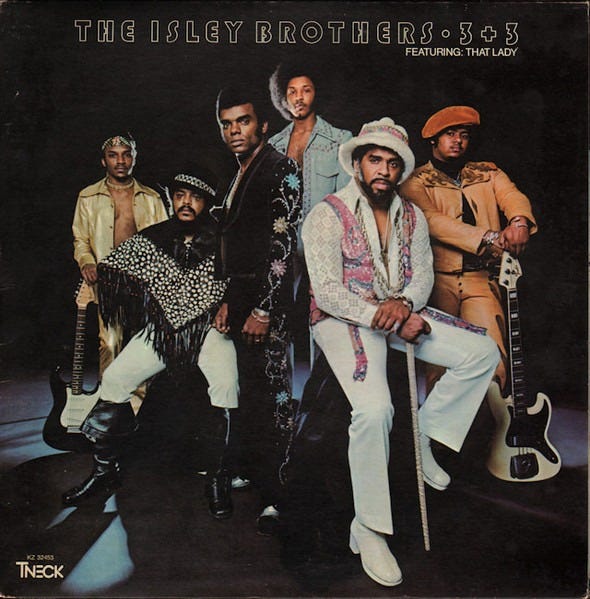
Speaking of glittery funk, the 70s-Isleys look hits hard with this jacket photo. The only question here is “who does it better?” And the only answer is a resounding “yes.”
Betty Davis - Betty Davis (Just Sunshine)
funk
Davis is going out. She says so, declaratively, about a minute into her debut album. She is “wigglin’ [her] fanny,” “raunchy dancing,” “vampin’” and “trampin’.” She is asking the “lady haters” to “not be cruel” nor “ruffle her feathers neither.” And, most importantly, Davis is commanding you—yes you, the beau in her sights—to “try not to pass out.” Gracious! As her wingman in this pursuit, a killer funk band: Sly Stone’s rhythm section, Santana’s rhythm guitar players, Merl Saunders on keys, the Pointer Sisters and(!?) Sylvester on back-up vocals. Lord have mercy. What Davis may lack in vocal range, she more than makes up for in charisma and songwriting, flipping the gender role of the sexual predator. Davis expresses herself by fluctuating between a purr and a growl, getting to her soul runs via projection akin to an overdriven guitar. She punches emotion instead of hitting notes, and the sloppiness is just what the sleek funk needs to keep from being too mechanical. Davis is George Clinton in booty shorts, Marc Bolan for the club, Tina Turner reimagined by Andy Warhol. In other words, progressive left-field funk as stylish as it is sweaty. What else would you expect from the woman personally responsible for connecting the sounds of Miles Davis to Jimi Hendrix? You’d expect it would be outlandish, and it is self-proclaimingly so.
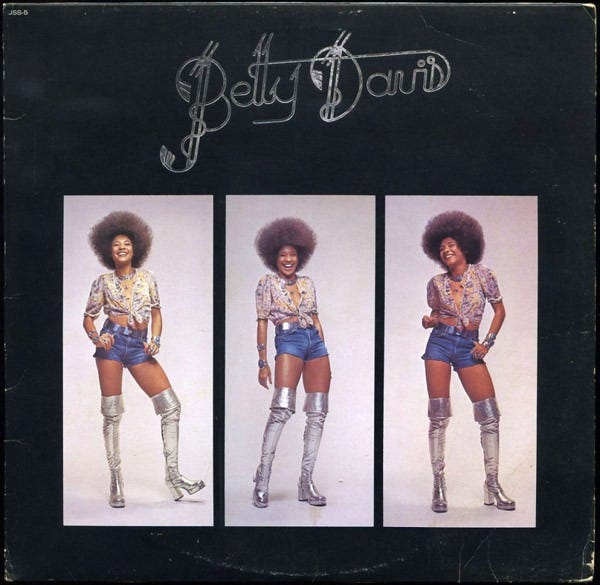
Can you tell Davis got her start as a model with those jacket photos? She obviously knows what she is doing in front of a camera. She also knows style, helping define disco’s look and typography just as the scene is coming together. Great album cover.
The Wailers - Burnin’ (Island)
reggae-pop
Reggae becomes the music of protest, particularly for the economically disadvantaged. Bob Marley is on the brink of superstardom, and the original incarnation of the Wailers are on the brink of disbanding. They relocate to London with the support of Island Records founder Chris Blackwell to record the follow-up to their breakout Catch a Fire. Blackwell’s injection of smoothed-over funk into their rocksteady roots makes for a perfect crossover sound. But Marley’s voice—sweet pitched, empathetic with a beach-side effortlessness, audibly straining as he pushes emotionally—is becoming the prominent one in the classic harmonizing trio of Marley, Bunny Wailer, and Peter Tosh. Marley is also getting the majority of the songwriting credits, creating an age-old financial tension among the group. But before Wailer and Tosh go their separate ways, they have a classic to record, a proselytization of Rastafarianism with a philosophy of equal rights and justice, propagandized through snail-paced funk, easy-going melodies, and globally appealing hooks. “Get Up, Stand Up,” “I Shot the Sheriff,” “Burnin’ and Lootin’,” the rerecording of “Small Axe”: they can all sooth after a painful day of frustration as well as inspire the next day’s protest. Anthems in a crisply produced; melody-heavy; black, green, and gold package. It is the ultimate crowd pleaser, and you need crowds to fight back.
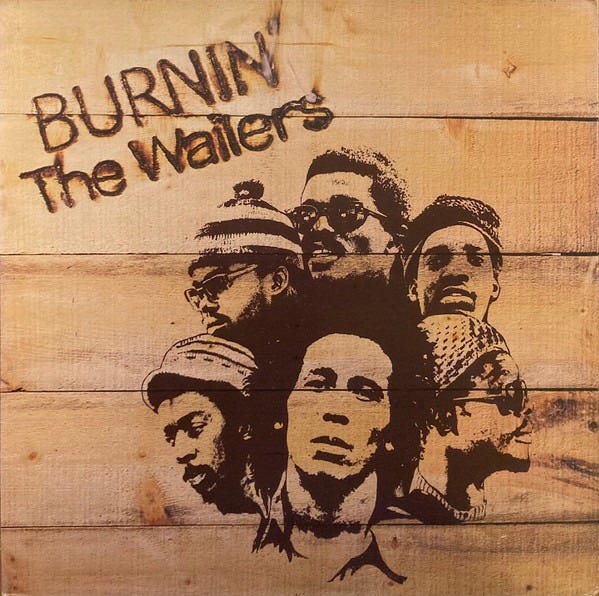
Speaking of Marley coming to the fore, he gets the pop star treatment on the album cover. It is an ok jacket, but doesn’t really seem to fit the music. Feels more like Island thought of how to visualize “Burnin’,” while wanting to capitalize on the band’s good looks.
Al Green - Call Me (Hi)
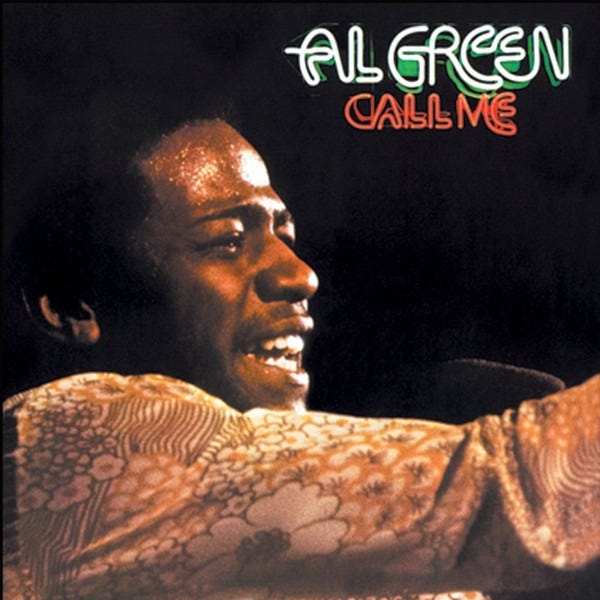
Memphis soul
Green’s star trajectory hits its peak. This is the soul singer’s fourth album in three years and while he won’t be slowing down for a long while, he arguably will never again reach the heights of Call Me. You could credit this to Green and producer/engineer Willie Mitchell perfecting their formula for smooth-yet-unpolished Southern soul. That “smooth” is partially because Green’s voice is so sexy, slinky, and sinuous it melts into your body as you listen. It is also because of Mitchell’s tasteful string arrangements, not to mention the way the Hammond organ makes your bath bubble without spilling a drop over the side. But the music is wonderfully unpolished as well. The backbeat cuts easily through all that tender meat, reverb be damned. And when you get a little horn action, it is a good reminder that Royal Recording Studios is located in downtown Memphis, particularly the low end growl that rounds out the chorus of “Here I Am (Come and Take Me).” So, for all the lets-run-that-sound-back-one-more-time of Green’s groove during this period, it never seems to get old. It works whether he is taking homespun tracks to the top of the charts or reinterpreting country classics from Willie Nelson and Hank Williams. It works if you are lonely and alone, together and getting steamy, or cruising with the windows down on a warm summer evening. Green and Mitchell arguably will never produce another album this consistently stellar again, even if they still have plenty of hits to come.
While the music improves upon 1972’s I’m Still in Love with You, the album cover does not. I like the fun use of neon as well as Green’s shirt, but they just set the bar too high with the previous record to clear it again.
Tom Waits - Closing Time (Asylum)
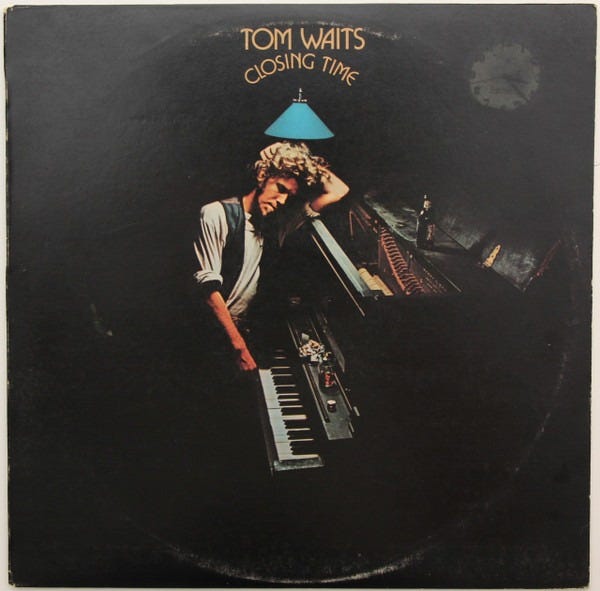
singer/songwriter
The sun sets on Waits’s career. That, for any other artist, would be a worrisome metaphor. For Waits though, bouncing between dimly lit folk houses in San Diego and nightclubs in Los Angeles as an aspiring songwriter, it is when his music makes most sense. David Geffen takes a chance on him after hearing a performance of “Grapefruit Moon,” thinking he has another promising folkie to slot between Judee Sill, Jackson Browne, and David Blue. Instead, he gets something very different, something just as interested in early jazz, Tin Pan Alley, country-blues, and Charles Bukowski’s dirty realism as it is folk authenticity. That’s why the lights need to be down. Waits will never again be this accessible, putting on his best Randy Newman suit with a throat that is yet to be filled with gravel. He lets his piano—melancholy and mellifluous—lead. An empty barroom sentimentality provides the energy, but Waits smartly doesn’t let it pickle in schmaltz. Instead, he pairs a seediness with that I’m-ok-with-my-place-in-the-world feeling you get just between your third and fourth gulps of whisky: “Now I’m smoking cigarettes / And I strive for purity / And I slip / just like the stars / into obscurity.” Producer Jerry Yesterday sometimes leans in a bit too hard with his string overdubs, but for the most part, the album is appropriately lit with bar lamps and maybe a decorative candle or two. Because that is where Waits belongs, in the back of the bar, after sunset, singing at no one in particular. The deconstructive dramatist is still to come. For now, the songwriter is getting an opportunity to glow in the dark.
The cover designer had one job and they do it well. Kudos, in particular, for the titling light fixture.
Love Closing Time!